People tired of protocol screenshots and wanting the first clean mouse answer.
Research bounty #001 / GHK-Cu route gap
SubQ GHK-Cu is popular. The mouse data is missing.
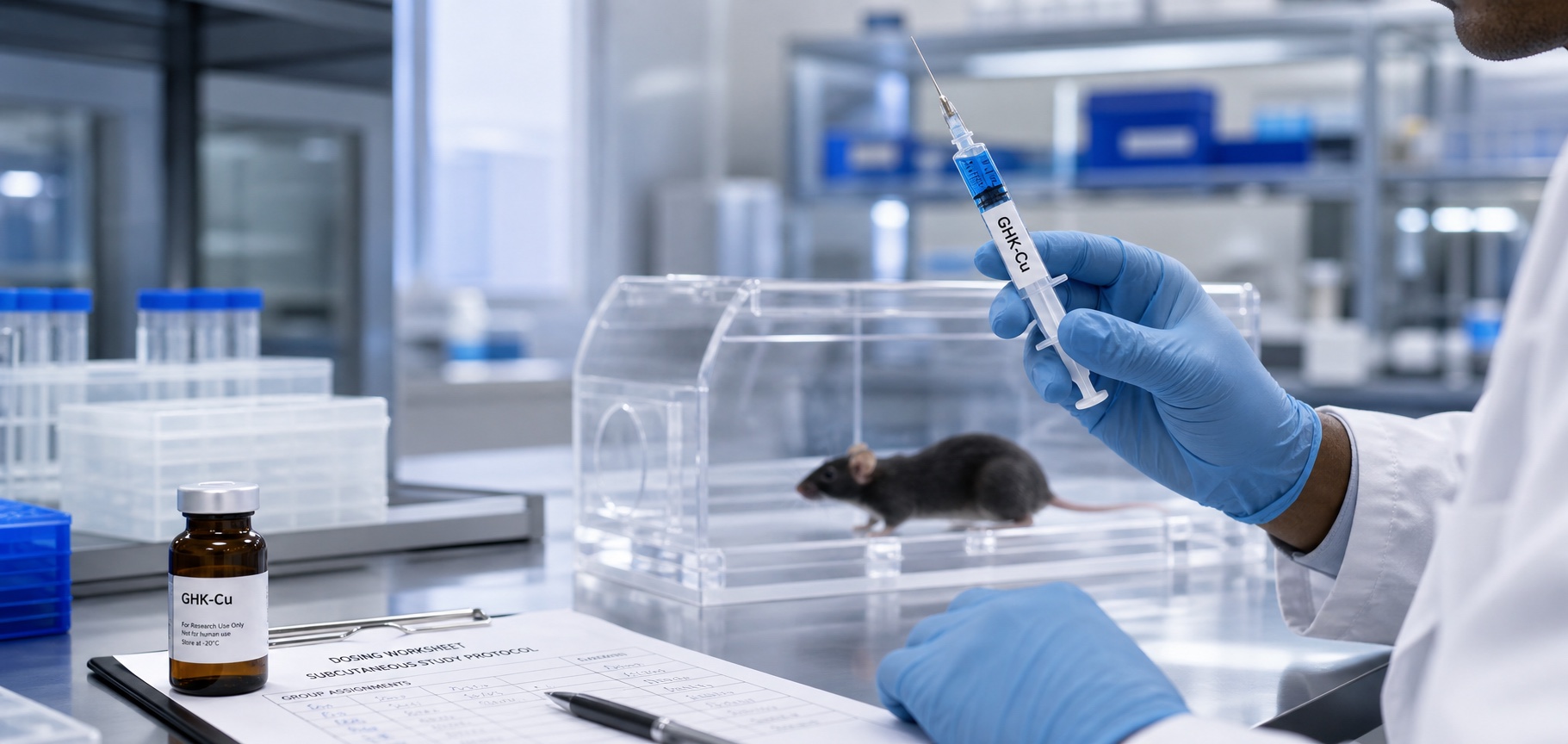
Related studies support GHK-Cu biology through topical, hydrogel, liposomal, wound-chamber, and intraperitoneal models. They do not answer ordinary subcutaneous delivery in intact tissue. This campaign reserves funding interest for a preclinical mouse package focused on route feasibility, tolerability, exposure, and repair readouts.
This is a community-funded research pilot — distinct from a self-serve VivoProof study, which you can specify and provision instantly in Proof Planner. No payment is collected on this page; pledges convert only after feasibility review, a confirmed study plan, and written payment terms.
Teams that discuss the SubQ claim and need route-specific caveats before repeating it.
Groups that care about route, tolerability, raw tables, and reusable endpoints.
The argument
The route got popular before the evidence got specific.
Subcutaneous GHK-Cu is framed as the more serious, systemic way to use the compound.
GHK-Cu has credible biology, local wound models, formulation studies, and injected animal models that answer different route questions.
When delivered by the route people actually discuss, does GHK-Cu show useful mouse signals without obvious tolerability problems?
What has actually been studied
GHK-Cu has evidence. The popular SubQ protocol has the gap.
Route matters. A hydrogel on a wound, a liposome on burned skin, an injection into a wound chamber, and an intraperitoneal lung model do not validate ordinary SubQ use in intact tissue.
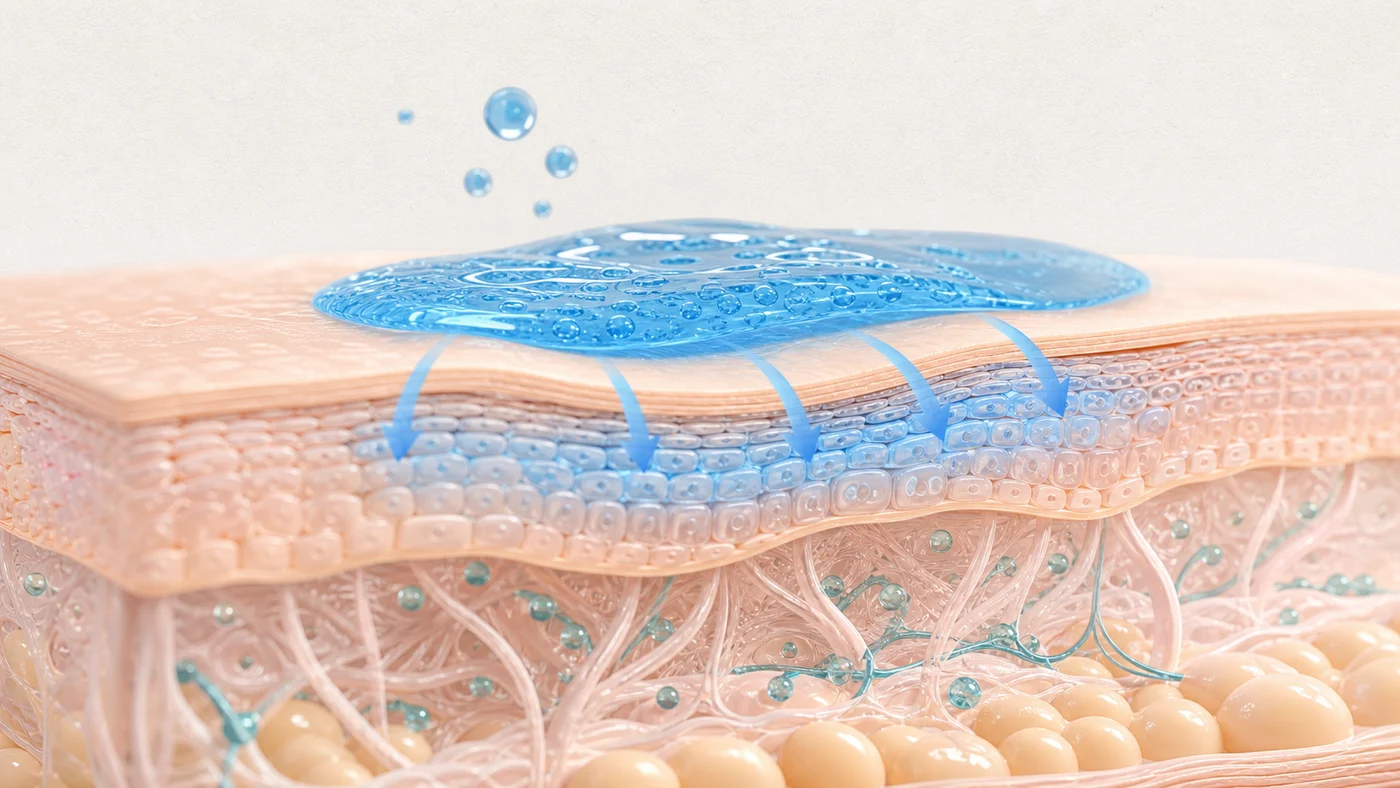
Topical and skin exposure
Useful for local skin and wound questions, but it does not tell us what happens after ordinary SubQ delivery.
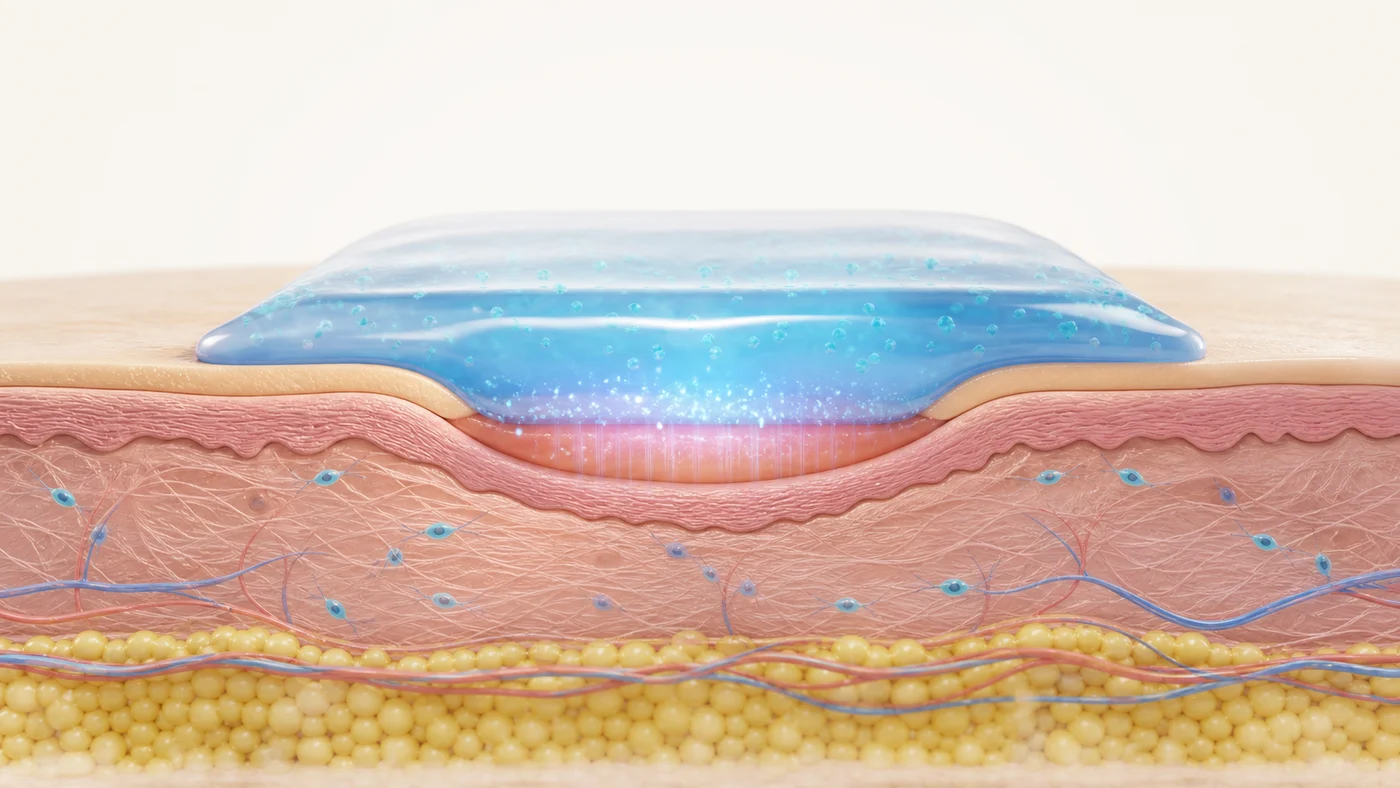
Hydrogel wound dressing
Tests a local scaffold and modified copper-peptide system in a wound environment, not plain injected GHK-Cu.
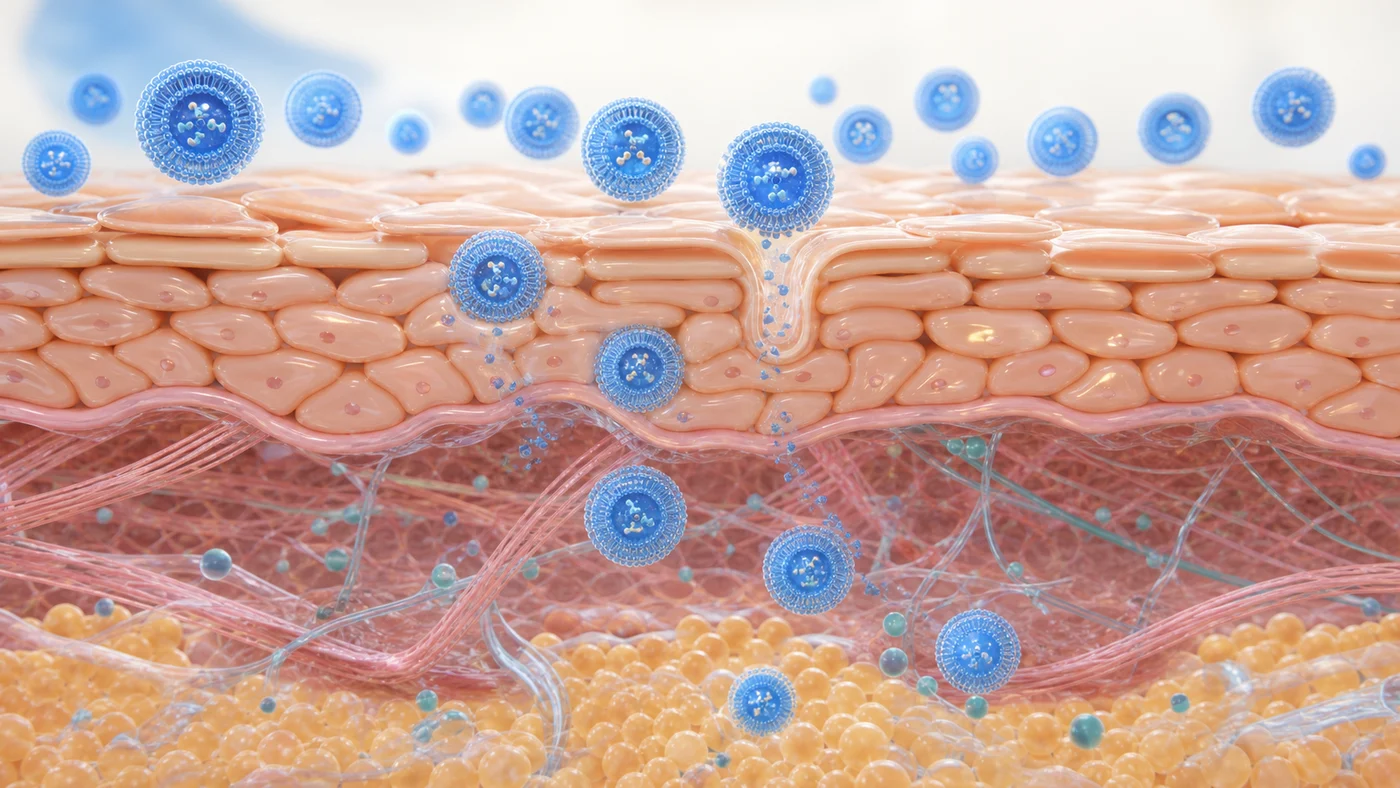
Liposomes and delivery systems
Helps answer whether encapsulated local delivery can improve wound exposure, not whether the SubQ protocol works.
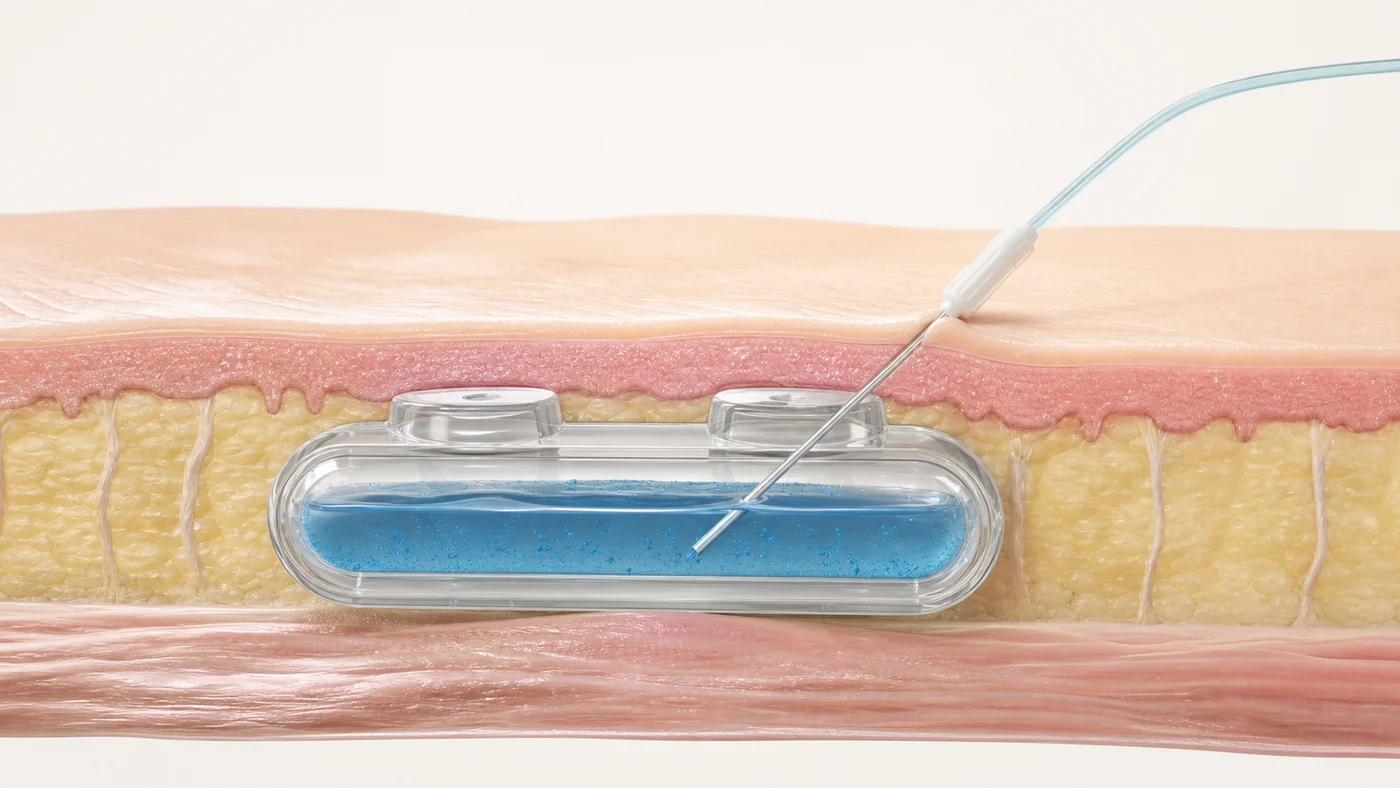
Subcutaneous wound chamber
Important rat data, but the compound was injected into implanted wound chambers, not ordinary SubQ intact tissue.
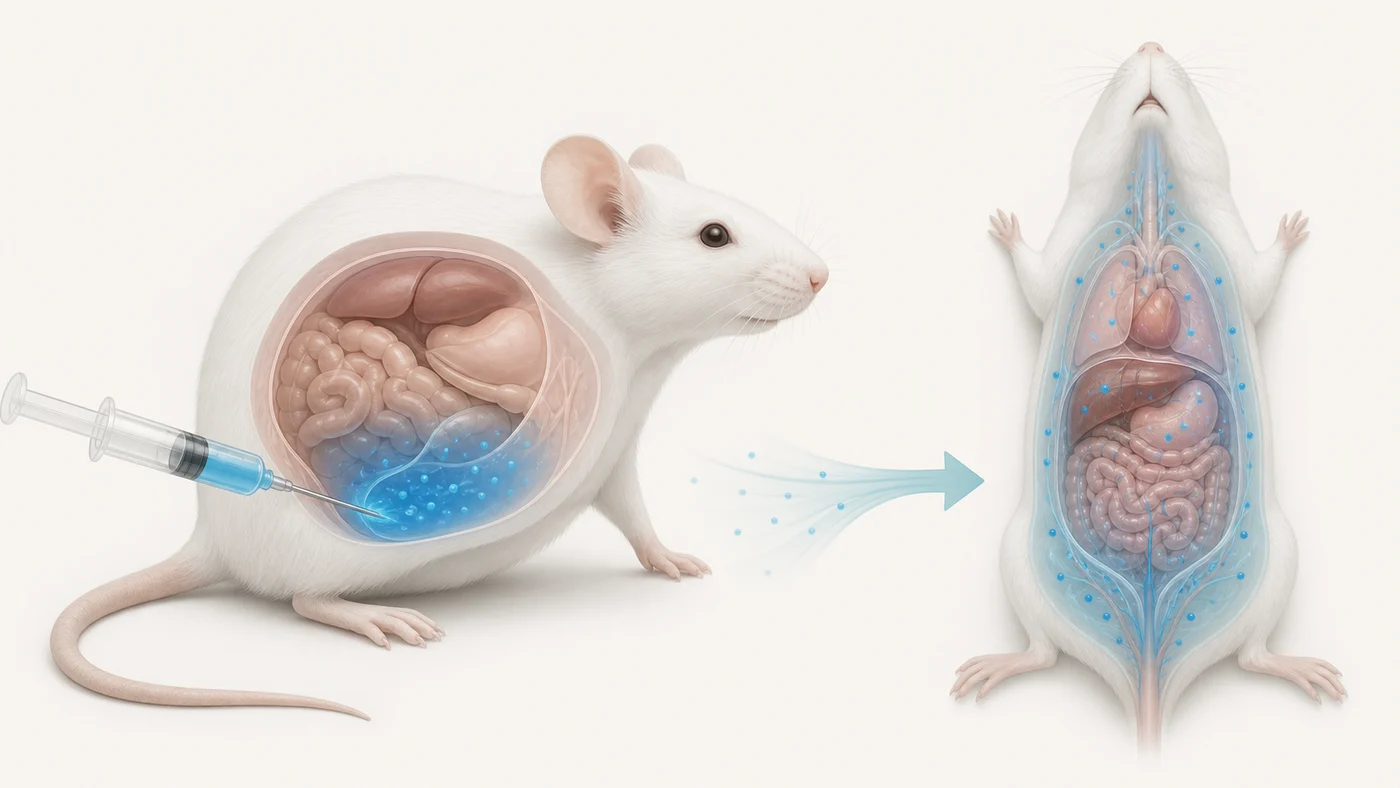
Intraperitoneal mouse models
Lung inflammation and fibrosis models support in vivo biology, but their route, disease context, and endpoints are different.
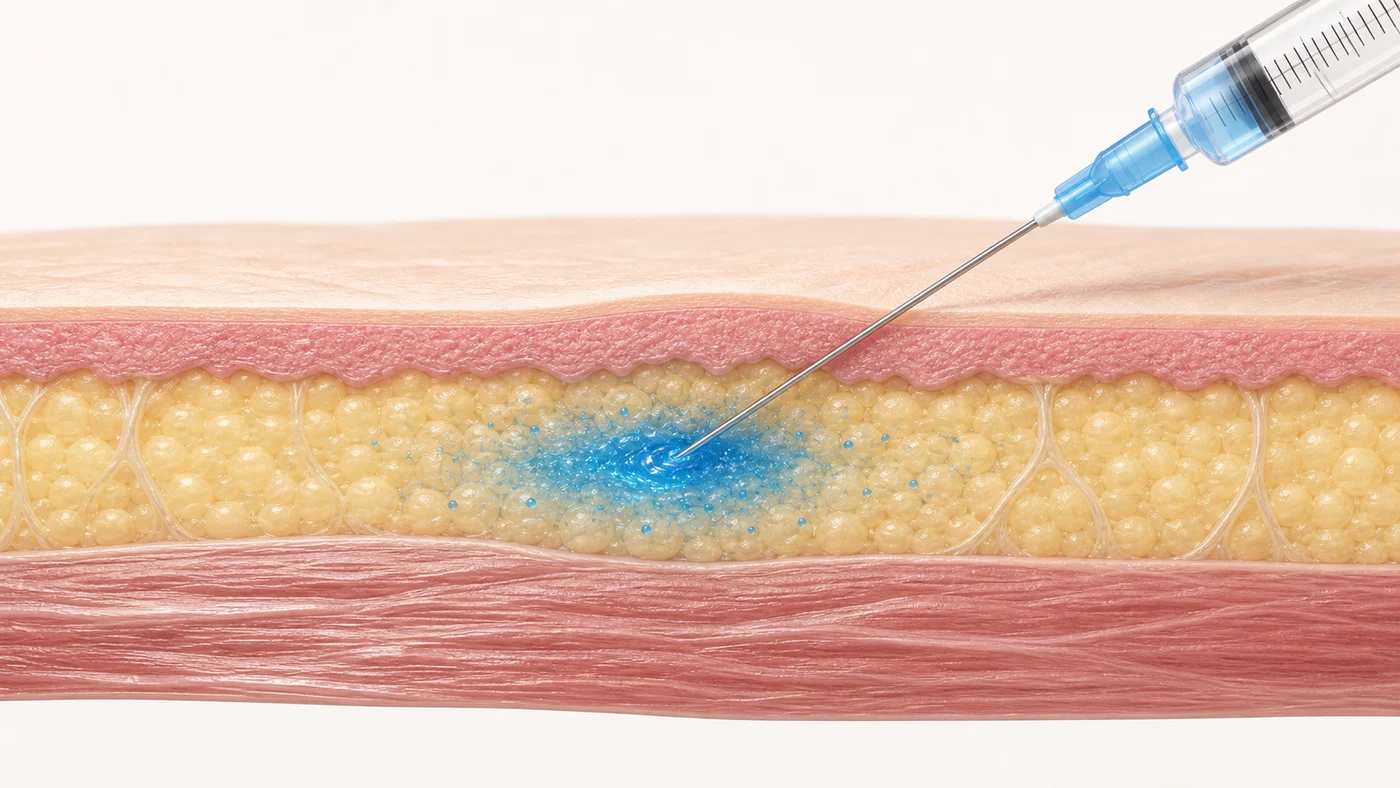
Ordinary SubQ protocol
We found wound-chamber and i.p. animal work. We have not found the clean ordinary SubQ mouse package for this route.
| Evidence bucket | What has been studied | What it helps answer | What it does not answer | Source |
|---|---|---|---|---|
| Foundational biology | GHK as a copper-binding tripeptide with early cell-uptake biology. | Why copper-peptide biology is worth testing. | Does not establish route, dose, tissue exposure, or in vivo efficacy for SubQ use. | Nature, 1980 |
| Liposomal wound model | GHK-Cu liposomes in a mouse scald-wound model, with cell proliferation and angiogenesis readouts. | Whether local encapsulated delivery can affect wound healing biology. | Does not validate plain GHK-Cu injected under intact skin. | PubMed, 2017 |
| Hydrogel wound dressing | Dimeric copper peptide incorporated into a hydrogel for diabetic wound healing. | Whether a local scaffold can deliver copper-peptide activity in a wound environment. | Does not answer ordinary SubQ injection, plain GHK-Cu formulation, or systemic claims. | Nature Communications, 2025 |
| Subcutaneous wound chamber | Rats with implanted subcutaneous wound chambers received injections into the chamber. | Local wound matrix accumulation and collagen-related biology in vivo. | Does not model routine SubQ injection into intact tissue without a chamber. | JCI, 1993 |
| Intraperitoneal acute lung injury | GHK-Cu was injected i.p. in an LPS-induced acute lung injury mouse model. | In vivo anti-inflammatory signals in a lung injury model. | Does not answer SubQ tolerability, local reaction, or skin/repair endpoints. | PubMed, 2016 |
| Intraperitoneal pulmonary fibrosis | GHK-Cu was injected i.p. in a bleomycin-induced pulmonary fibrosis mouse model. | Organ-disease biology around inflammation, oxidative stress, and fibrosis pathways. | Does not validate the public SubQ protocol or a general human repair claim. | PubMed, 2019 |
| Ordinary SubQ injection | A clean mouse package for plain SubQ GHK-Cu, aligned to the route discussed online. | Route feasibility, local tolerability, exposure assumptions, and repair-signal direction. | This is the missing answer the campaign is designed to produce. | Fund the pilot |
First experiment
A tight mouse package, not a vague wellness claim.
Final protocol, dose levels, timing, and animal count must be set by the lab and animal-care review process.
Verify the material
Identity, purity, copper content, storage condition, lot quantity, and endotoxin expectations.
Test the route first
SubQ solubility, sterile handling, route feasibility, local reaction risk, and custody assumptions.
Separate tolerability from efficacy
Body weight, observations, injection-site notes, basic chemistry where feasible, and deviation logging.
Use a visible repair readout
A mouse wound-repair model aligned with GHK-Cu biology, with histology and biomarker add-ons if budget allows.
Release the useful parts
Subject-level XLSX/CSV, images when feasible, methods summary, deviations, and a plain-English limitations memo.
Pre-review target
$25k public target for a quote-ready mouse pilot.
Proof Planner currently estimates this package at an $18k-$25k managed range, with a $21k planning midpoint. The public target covers the high end before operations review confirms model, animal count, assays, documentation level, payment terms, and material requirements.
Planning packet, project controls
$2k
Identity, purity, formulation, handling review
$3k
SubQ feasibility, tolerability, and PK window
$9k
Local tissue, application-site readout, sample handling
$7k
Data cleanup, report, public summary, limitations
$4k
Campaign signal model
Track funding demand before collecting payment.
The live campaign should separate reservations from revenue. The useful signals are pledge reservations, data-package interest, study-packet requests, and which endpoints funders want prioritized before the plan is finalized.
Pledge reservations
Data-package interest
Study-packet requests
Endpoint priorities
Reservation target
$25k
Wants public milestone updates, the final study summary, and a plain-English limitations memo.
Wants raw tables, methods notes, sample maps, and route-specific caveats when terms allow.
Wants input on biomarker, tissue, exposure, or repair readouts before final planning lock.
Requests study packet, data-rights discussion, and review call before payment terms are issued.
Reservations are non-binding interest signals, not collected payments. No money is collected on this page — pledges convert only after the study is scoped and you confirm.
Why this matters
A protocol can go viral without becoming true.
The first target funds the narrow preclinical answer that should exist before the subQ claim keeps spreading: route feasibility, tolerability, repair readouts, raw tables, and the limits of what mice can tell us.
Timeline
From reserved pledges to public results.
Study review
Confirm plan, animal count, assays, material needs, and welfare-review path.
Funding close
Qualify backers, finalize payment terms, and lock the study packet.
Mouse run
Execute the approved subQ feasibility, tolerability, and repair-signal package.
Public report
Release a plain-English summary, methods caveats, and data package terms.
Evidence base
The biology is interesting. The injection-specific evidence is the hole.
Prezatide copper identity
PubChem provides compound identity context for copper tripeptide related entries.
Open PubChemGHK and copper uptake
Pickart's early work supports the copper-peptide biology that made the compound interesting.
Open Nature abstractLPS acute lung injury
GHK-Cu was studied in an LPS-induced mouse lung model with i.p. injections, supporting in vivo biology but not SubQ use.
Open PubMedPulmonary fibrosis
GHK-Cu was studied in bleomycin-induced pulmonary fibrosis in mice with i.p. dosing, not ordinary SubQ delivery.
Open PubMedGHK-Cu liposomes
A mouse scald-wound study tested liposomal local delivery and wound-healing readouts, not SubQ injection.
Open PubMedDimeric copper peptide hydrogel
A diabetic wound-healing hydrogel paper supports local delivery interest while using a different formulation and route.
Open Nature CommunicationsInjected chamber model
Older rat work injected GHK-Cu into implanted wound chambers, a useful wound model that does not match routine SubQ use.
Open JCIARRIVE-style reporting
The study should be planned around transparent in vivo reporting, exclusions, randomization, and limitations.
Open ARRIVE 2.0NAMs plus animals
FDA's New Approach Methodologies context supports using non-animal tests where possible and animals where in vivo biology is the real unknown.
Open FDA NAMsQuestions backers ask
Keep the promise narrow so the result is harder to dismiss.
Are you claiming injectable GHK-Cu works in humans?
No. The campaign funds a preclinical mouse question. Human efficacy, safety, and dosing would require separate clinical evidence.
Why not rely on topical or other animal data?
Different routes can change exposure, local tolerability, tissue distribution, and interpretation. Hydrogel, liposomal, wound-chamber, and i.p. mouse data help frame the question, but the popular ordinary SubQ route still needs its own package.
Why start with mice?
A mouse package can test route feasibility, tolerability, and repair signals before anyone spends more on larger or more complex studies.
When is payment collected?
This page reserves pledge interest. Payment terms should only be sent after feasibility review and confirmed study plan.
Back the missing study
Reserve your share of the answer.
Start at $20/mo, edit the amount, or switch to one-time. We will review funders and send written payment terms after the study plan is confirmed.
Monthly campaign support for feasibility updates and public reporting.